The evidence behind a clinical or research decision is spread across the literature, guidelines, trial registries and regulatory documents. I bring it together and turn it into a clear answer you can act on.
Evidence review
What is known about your question, how certain it is, and what is still missing. I search systematically, check every claim against its primary source, and state gaps and limitations plainly. Reviews range from one focused question to a whole field, across clinical, preclinical and regulatory evidence, with meta-analysis where the data allow.
A map of who is testing what, at which phase and where, drawn from ClinicalTrials.gov and the EU’s trial register (CTIS), alongside the treatments already authorised.
For patients
The trials they may qualify for and, where none fits, compassionate use (expanded access in the US) or off-label use, in Slovenia, the EU and beyond. Patients and their doctors decide which to pursue.
Study documents
Models, endpoints, dose selection and comparators: the evidence behind preclinical and clinical study decisions. Your clinical, statistical and regulatory specialists own the design; I draft and review the protocols, synopses, investigator’s brochures and briefing books that carry it, under EU regulation and ICH guidelines.
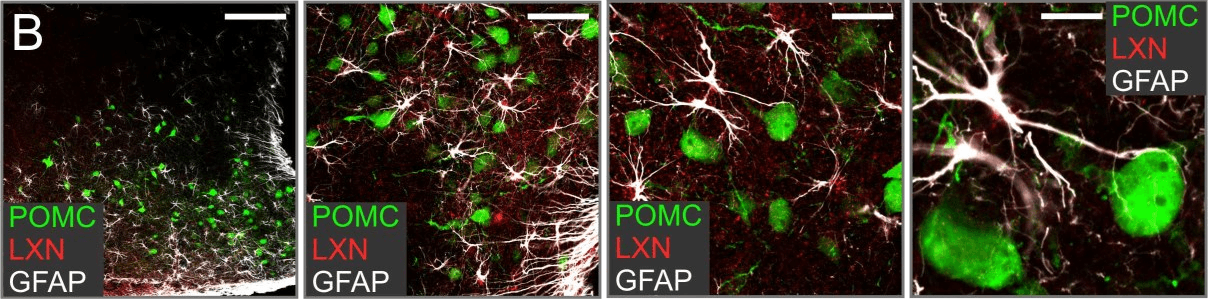
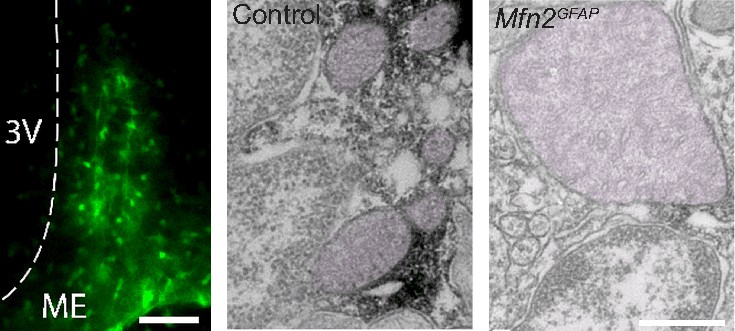
Astrocytes lacking Mfn2 (green) and their mitochondria under the electron microscope, in a mouse model with defined endpoints: food intake, weight and synaptic coverage.
Harkany et al. · Research Square, 2024 Preprint · Fig. 6e–f, rearranged · CC BY 4.0
Scientific writing
For researchers
Manuscripts, reviews, abstracts and responses to reviewers.
For patients
Plain-language summaries of the research on their condition, in English or Slovenian, for families and patient organisations too.
Typical length of each package. Project coordination runs for several months, with a trial sweep each month.
1Evidence snapshot
Length
About 1 week
You receive
One question, one short report: an evidence review with a written opinion, a trial landscape for sponsors, the trials and access routes for one patient, or a summary for patients or specialists.
For example
A team asks “Is there preclinical support for target X in indication Y?”
A family asks “Are there trials my child could join?”
2Full evidence review
Length
2–3 weeks
You receive
A full review, a one-page summary and a glossary, including a trial eligibility matrix and access routes where relevant.
3Project coordination
Length
Several months
You receive
A longer project with several strands, coordinated with treating teams, research centres and CROs.
Trial sweeps and the eligibility matrix are repeated each month, since registries change weekly, alongside new evidence on open questions and regulatory updates.
+Add-ons
Available with any package, either from the start or at any point during the work.
Second-opinion dossier
A written package for a referral or specialist centre. It follows the format the centre’s intake expects and is written in English or Slovenian.
In-person support
Support in person, at meetings where the evidence matters. We agree together on what that looks like.
This is not medical advice. Decisions about treatment stay with the patient and their doctors.
Jarc et al.
Independent evidence review and scientific consulting.